

A Growing Presence: Women in the Next Generation of Law Enforcement
Catawba Valley Community College continues to prepare future law enforcement professionals through its Basic Law Enforcement Training (BLET) program. In 2026, the program launched a record three cohorts between January and August, with a total of 45 cadets beginning training. The latest cohort began with fourteen cadets, five of whom were women. While BLET classes have traditionally included two to three female cadets, this group began with twice the typical number. The increased representation reflects ongoing efforts to work alongside local law enforcement agencies to recruit officers who better represent the communities they serve.
CVCC’s Basic Law Enforcement Training certificate program prepares students for entry-level employment with state, county, and municipal law enforcement agencies. Throughout their training, cadets develop the knowledge and practical skills needed to begin a career in law enforcement. Training covers a range of subjects, including criminal and civil law, patrol and investigative procedures, emergency response, ethics and community relations. Cadets also complete physical training and practical exercises that prepare them for the demands of working in the field. For the five women in the current cohort, the program represents an important step toward careers they have envisioned for years. Although their backgrounds and motivations differ, each is working toward a career centered on serving others.
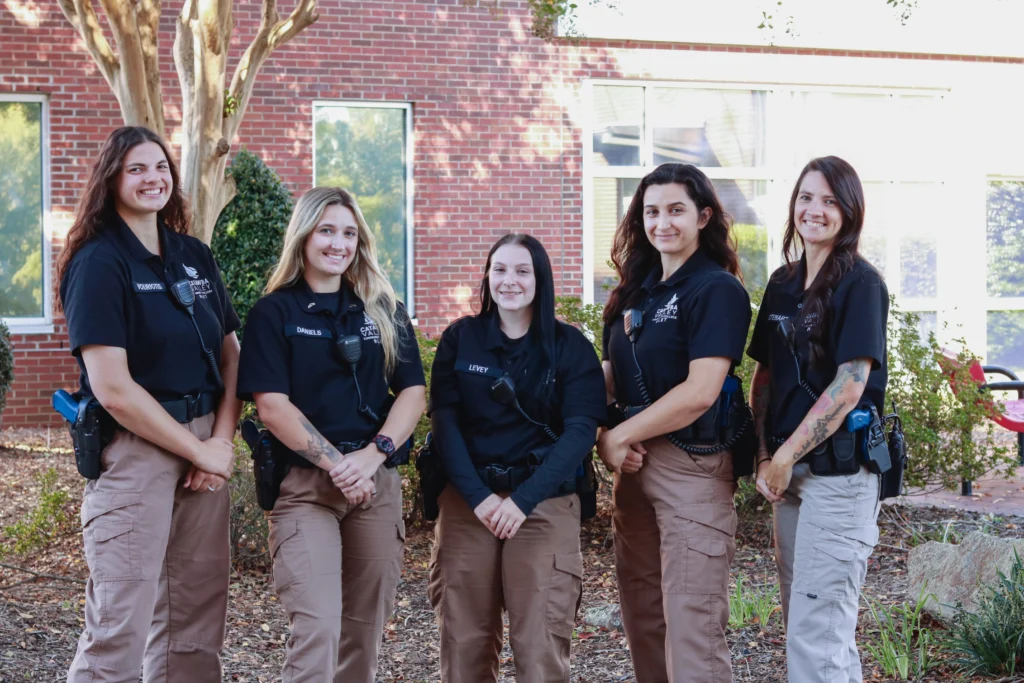
Meet the Cadets
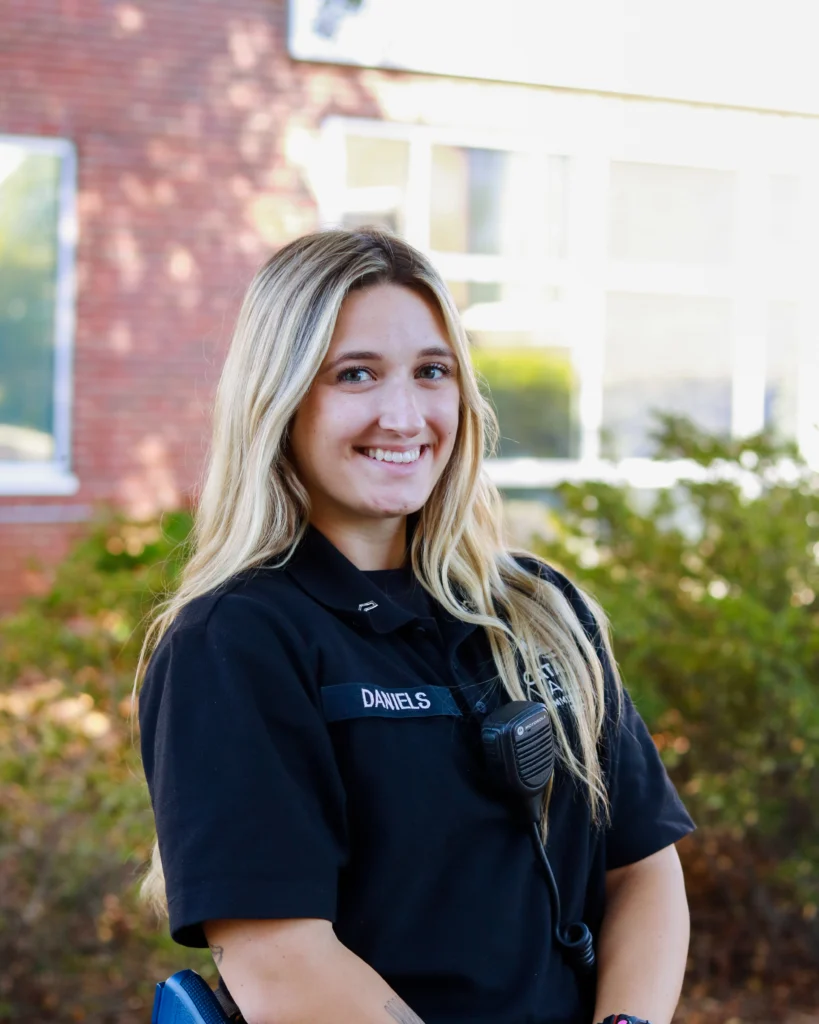
Cadet Daniels
Isabella Daniels knew she wanted to pursue law enforcement while still in high school. Her interest grew through two internships with the Catawba County Sheriff’s Office, one during high school and another while attending Lenoir-Rhyne University. She went on to earn a double major in criminal justice and psychology, using her time in college to prepare for the next step in her career.
After completing CVCC’s Basic Law Enforcement Training program, Daniels plans to begin her career in patrol before pursuing opportunities in investigations. Her long-term goal is to work with the North Carolina State Bureau of Investigation (SBI), conducting investigations at the state level. She also values being part of a BLET cohort with several women, noting that previous classes appeared to have fewer female cadets.
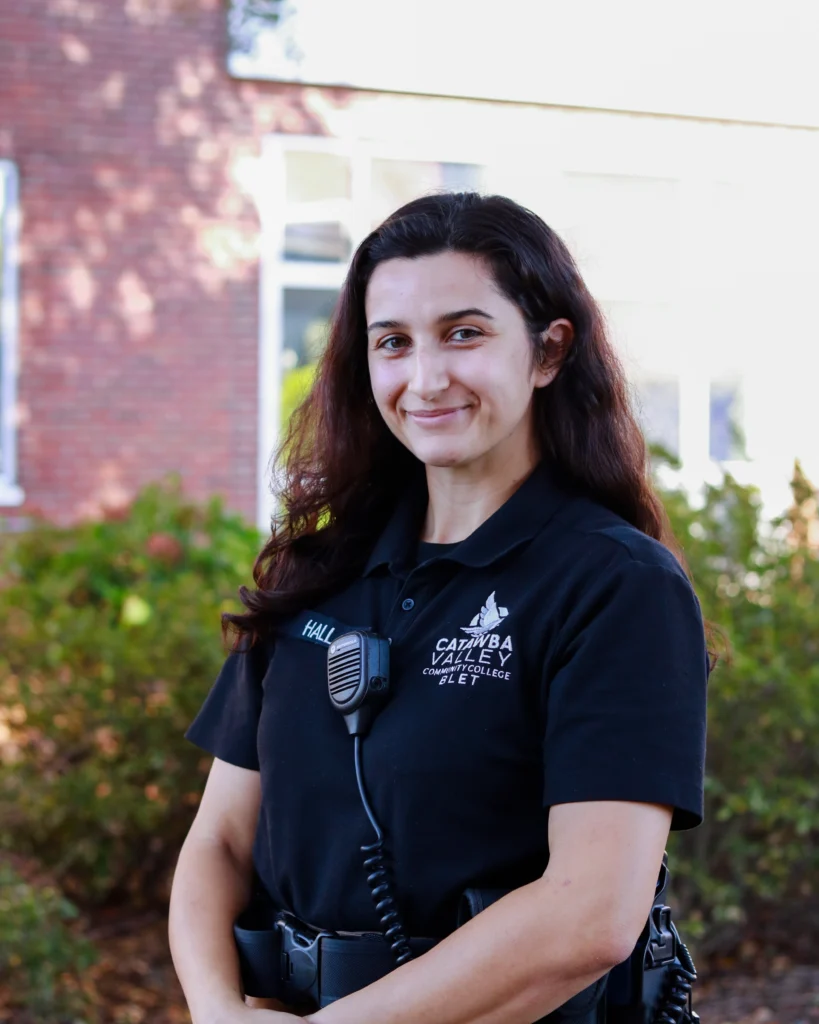
Cadet Hall
After moving to North Carolina from Illinois at age 15, Jessica Hall began exploring her interest in law enforcement through the Police Explorers program at the Statesville Police Department, where she served as captain for two years and participated in community events and volunteer projects. She later attended North Carolina Central University, earning her bachelor’s degree in December 2024. During college, Hall also volunteered as a guardian ad litem court advocate in Iredell County, experiences that helped shape her interest in working with vulnerable children and families.
Through her advocacy work, Hall developed a strong interest in combating human trafficking and supporting its victims. She hopes to one day work in a Special Victims Unit or a similar specialized role, helping rescue and advocate for children and adults affected by trafficking. For Hall, completing CVCC’s Basic Law Enforcement Training program is an important step toward pursuing that goal and building a career centered on protecting those who need it most.
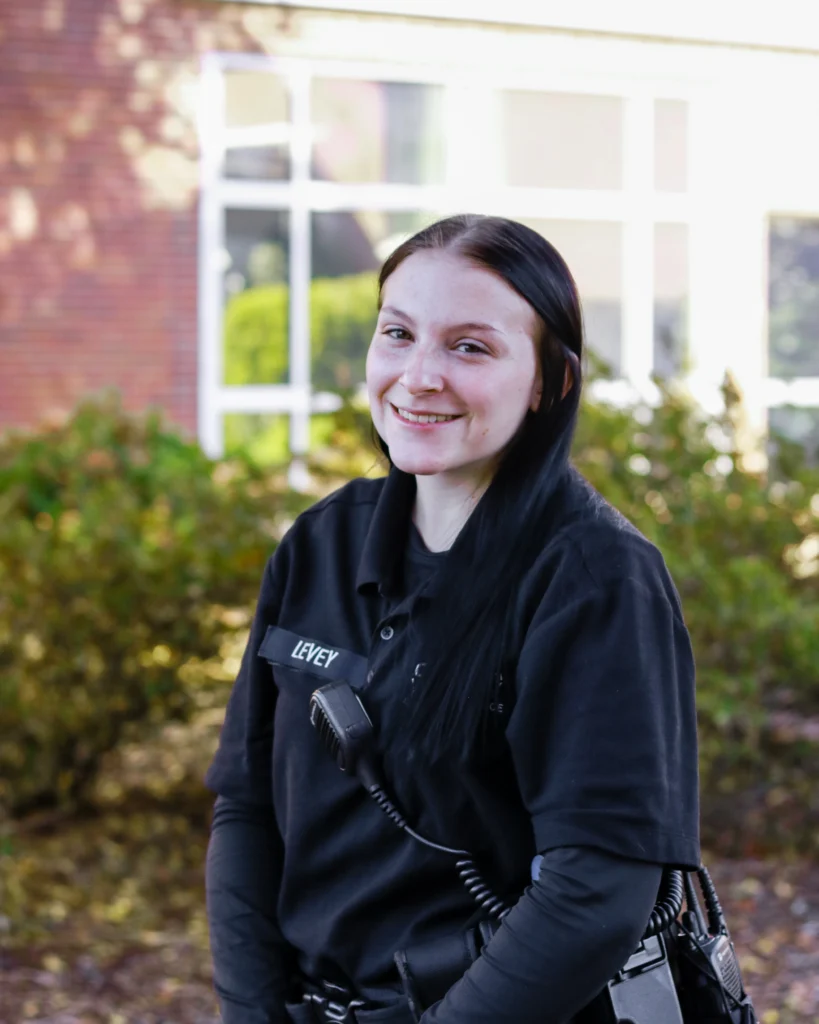
Cadet Levey
Growing up with a father who serves as a law enforcement captain, Madalynn Levey was introduced to the profession at an early age. She remembers attending his swearing-in ceremony when she was just five years old, but her own career plans initially took a different direction. After considering a future in veterinary medicine, Levey ultimately found herself drawn to law enforcement after witnessing the personal impact the profession can have on officers and their families.
Seeing her father navigate public criticism and the challenges of serving his community strengthened her desire to continue his legacy while building one of her own. Through CVCC’s Basic Law Enforcement Training program, Levey hopes to demonstrate that leadership and the ability to enforce what is right are not defined by size or background. For her, wearing the badge is about more than following in her father’s footsteps. It is an opportunity to make her own difference and remind others that the people behind the badge are human, too.
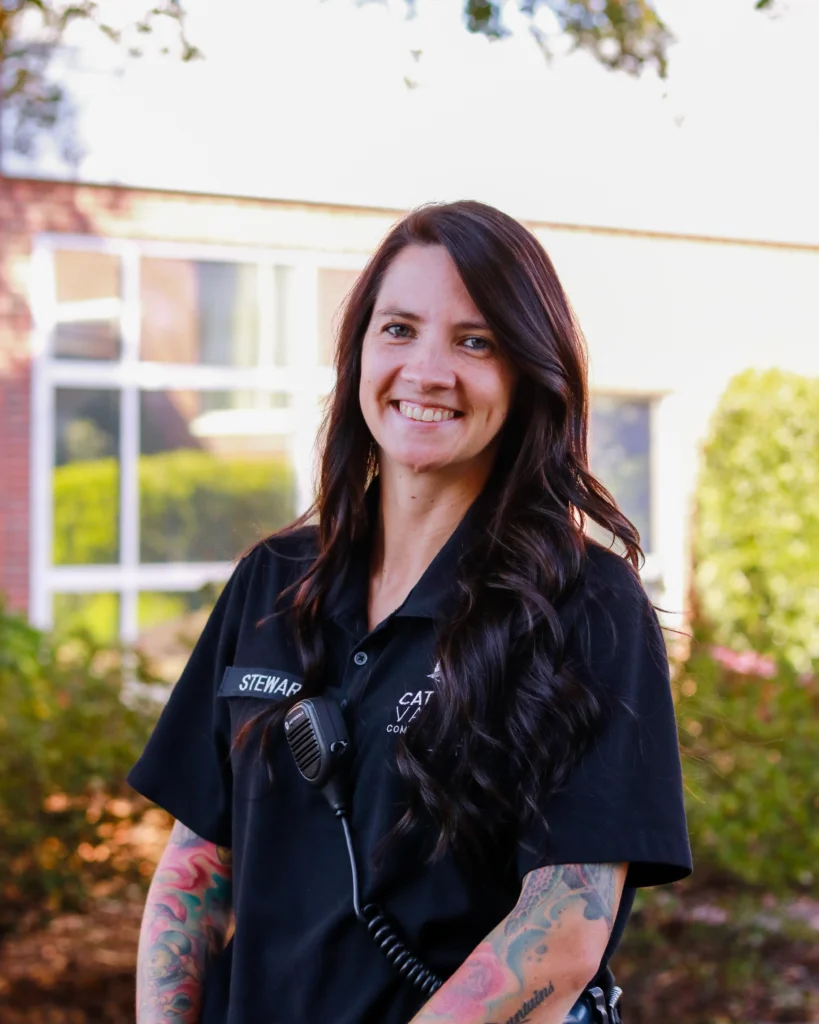
Cadet Stewart
After spending years working as a veterinary technician, Lauren Stewart decided to pursue a new career path in law enforcement. Coming from a family with no history in the profession, Stewart initially explored forensic work before completing an internship that introduced her to the opportunities for growth in patrol. Through that experience, she discovered a career goal that brings together her interests in public service and animals: becoming a K-9 handler.
As a mother, Stewart is motivated by her desire to build a future for herself and her son while setting an example for young girls who may one day consider a career in law enforcement. She is also drawn to the opportunity to make a direct difference in people’s lives, particularly through crisis intervention. Whether helping someone through a difficult moment or one day working alongside a K-9 partner, Stewart hopes to use her role to serve others and make a lasting impact.
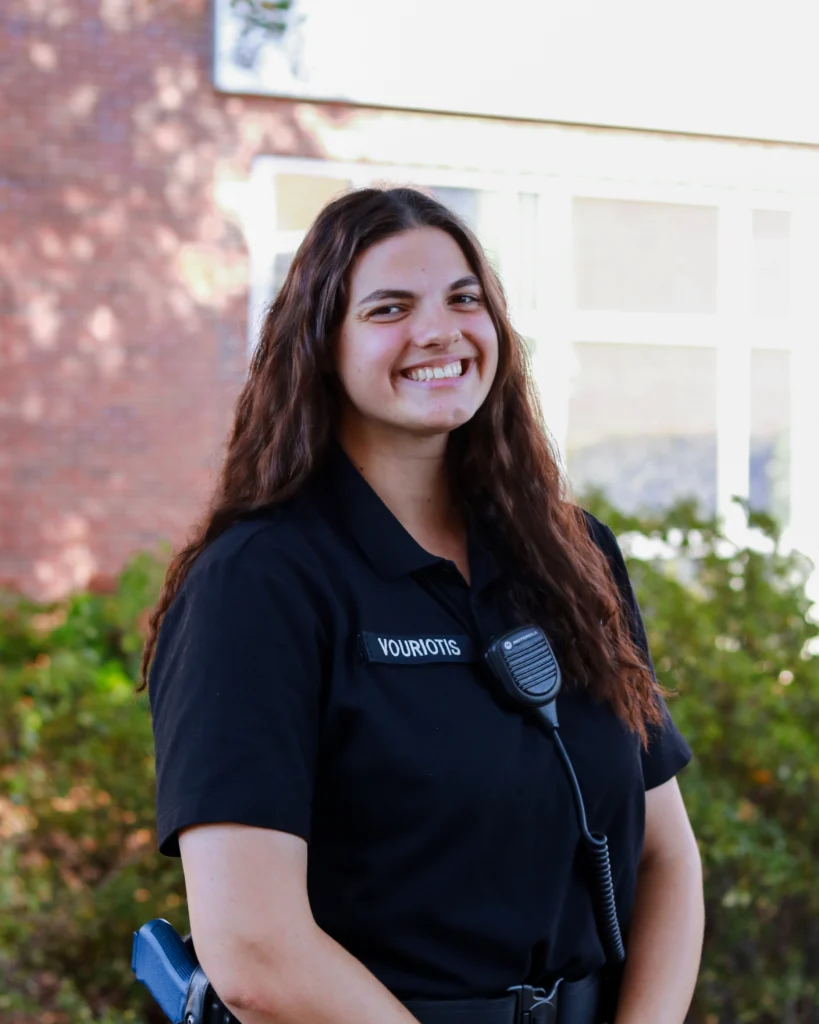
Cadet Vouriotis
Inspired in part by her uncle, a retired FBI agent, Adara Vouriotis began considering a career in law enforcement after learning about his experiences and writing his autobiography during her sophomore year of high school. She went on to spend two and a half years studying criminal justice in college, where she also minored in psychology and developed an interest in understanding the motivations and behaviors behind criminal activity.
Vouriotis hopes to eventually pursue investigative work, with a particular interest in cold cases. She is drawn to the opportunity to interview people, hear their stories and help bring closure to individuals and families who have waited years for answers. Along with pursuing a career alongside her fiancé, Vouriotis is motivated by the opportunity to serve as an example for young girls who may see a woman in law enforcement and recognize that the same path is possible for them.
Although women have served in law enforcement for generations, they remain underrepresented throughout the profession. According to the 30×30 Initiative, women account for approximately 13% of sworn law enforcement officers nationwide. Women represented 20% of police academy, however about 40% of the approximately 18,000 law enforcement agencies in the U.S. have no full-time women officers
The 30×30 Initiative is a national effort to increase women’s representation in police recruit classes to 30% by 2030. Beyond recruitment, the initiative also focuses on creating supportive environments where women can build lasting careers and advance into leadership positions.
For the women in this cohort, having more female classmates has made a difference. The shared experience has created opportunities to encourage one another, work through challenges, and build relationships with classmates who understand some of the unique pressures of entering a male-dominated profession.
As the class assistant leader, Cadet Daniels has seen photos of previous BLET classes with only one or two women, or none at all. She said having a stronger female presence in the current class has been meaningful in her leadership role, giving cadets both a male and female point of contact. “I think that’s important because we have a strong female presence in the class,” Cadet Daniels said.
The physical training component has been one of the biggest challenges for several of the women. The program requires cadets to build the physical strength and endurance needed for the demands of law enforcement, and each cadet enters training with a different background and fitness level.
Cadet Stewart said returning to physical training was especially challenging after a serious car accident required spinal surgery and a year away from working out. Rebuilding her strength while meeting the program’s expectations has not been easy. Still, she sees the training as an important part of preparing to protect herself, fellow officers, and the public.
“Getting back here, getting back into that physical shape that you have to be in to protect yourself and your friends and your coworkers and even public citizens,” Cadet Stewart said.
For Cadet Levey, her classmates’ support has helped her work through those moments. This is a group of women who regularly encourage one another during physical training and check in when someone is having a difficult day. “It’s a brotherhood, but this is actually like a sisterhood,” Cadet Levey said.
Cadet Vouriotis said physical training has also been her biggest area of struggle. Rather than trying to overcome every challenge on her own, she has learned to lean on classmates who have strengths in areas where she wants to improve. “The biggest thing is finding someone who has a strength in your weakness area,” Cadet Vouriotis said.
The demands of BLET extend beyond physical training. Cadet Hall said the program requires cadets to be adaptable, mentally prepared, and ready for change, with each week bringing new lessons and expectations. She described the experience as a different kind of challenge than traditional schooling, one that requires cadets to take responsibility for their own progress while learning to work as a team. “You have to expect change every day. You always have to be ready. You mentally have to prepare yourself,” Cadet Hall said. “You are your own advocate.”
Despite those demands, Hall said the challenge is one of her favorite parts of the program. She enjoys being pushed both mentally and physically while building relationships with classmates she may not have otherwise gotten to know. “These girls are half the reason I love coming back to CVCC,” Cadet Hall said. She explained that the relationships have helped her become more comfortable and confident, while also encouraging her to keep pushing herself alongside the rest of the class.
The cadets’ experiences also highlight why representation matters beyond the classroom. Each brings a different background and career goal to the profession, from investigations and special victims work to K-9 handling. Their perspectives are already shaping their training, including practical exercises that require communication, problem-solving, and de-escalation.
Cadet Vouriotis recalled working with Cadet Stewart during a de-escalation scenario. Although they approached the conversation differently, they shared the same goal: calming the situation and lowering the person’s stress level. She said the experience showed how different communication styles can work together to reach a positive outcome.
For Cadet Stewart, becoming an officer also means showing younger generations that women have a place in the profession. She hopes her career will be an example for her son and for girls who may not have considered law enforcement as an option. “I am doing this for myself, for my son, and for all the little girls that are watching us,” Cadet Stewart said.
Cadet Vouriotis shares that hope. She believes seeing a woman in uniform can make a young girl curious about the profession and help her imagine a similar future. “Being able to ignite that fire in someone,” Cadet Vouriotis said, is one of the meaningful possibilities of having more women represented in law enforcement.
“Law enforcement has so many branches. It’s not linear. You know, you don’t just stay in one spot for the rest of your life,” Cadet Hall said. “There’s something in there for any woman.” Emphasizing that law enforcement offers opportunities across a variety of specialties and career paths.
For the next generation of women considering a career in law enforcement, the cadets hope their experiences encourage them to pursue a field where they can make a difference. They recognize that the path can be challenging but believe determination and a clear sense of purpose can help women find their place in the profession.
Cadet Daniels encourages young women not to let uncertainty or outside opinions keep them from pursuing a career they feel passionate about. “I would tell them that as long as their heart’s in it, they can do anything. If you’ve got the push and the drive, you can get anything accomplished that you want to,” Cadet Daniels said.
For Cadet Levey, being a law enforcement officer also means taking on the responsibility of building trust and strengthening relationships between officers and the people they serve. “I want to be a law enforcement officer and a leader, because I want to bridge that gap between the community and law enforcement,” Cadet Levey said.
The cadets recognize that BLET is only the beginning. The approximately six-month program is designed to prepare them for the demands of entry-level law enforcement, and the challenges they are working through now are part of that preparation. As they continue training, they are learning not only the skills required of an officer but also how to rely on one another, recognize their individual strengths, and keep moving forward when the work becomes difficult.
Start Your Path at CVCC
For anyone interested in pursuing a career in law enforcement, CVCC’s Basic Law Enforcement Training program offers a pathway to develop the skills and knowledge needed to enter the field. Whether someone is interested in patrol, investigations, specialized units, or another area of public safety, BLET can be an important first step toward exploring those opportunities. To learn more about CVCC’s Basic Law Enforcement Training program, including upcoming classes and enrollment requirements, visit the BLET page.
2026 Cohorts
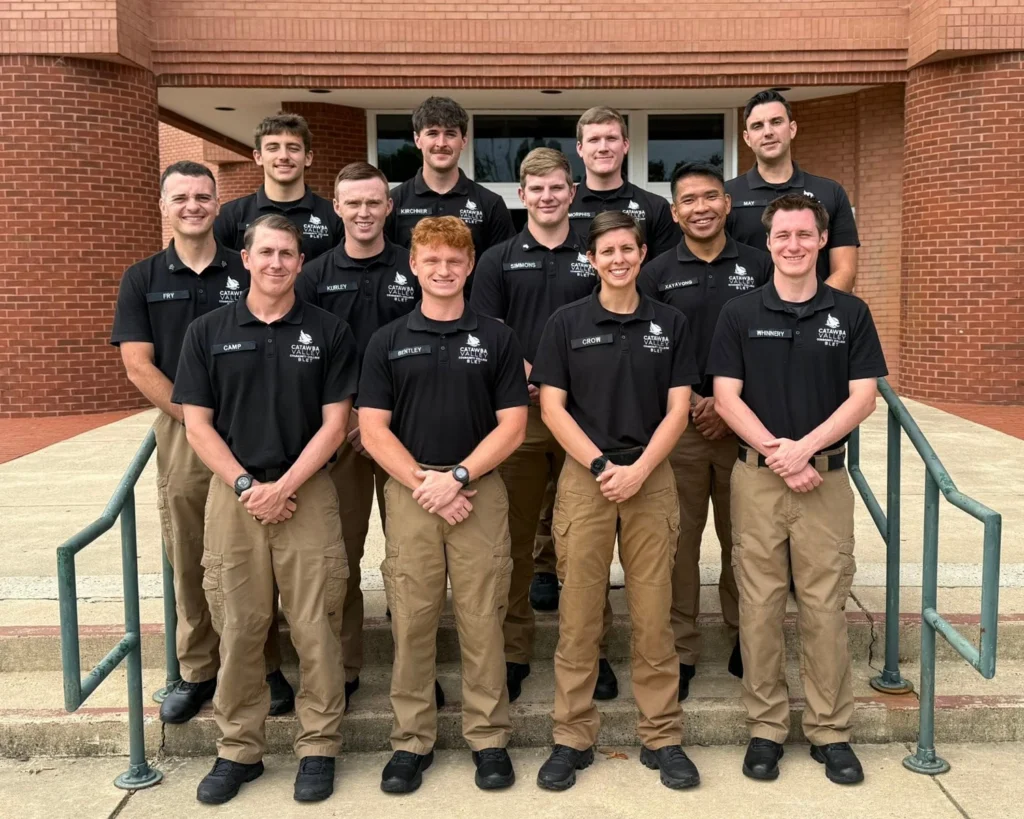
Class 84
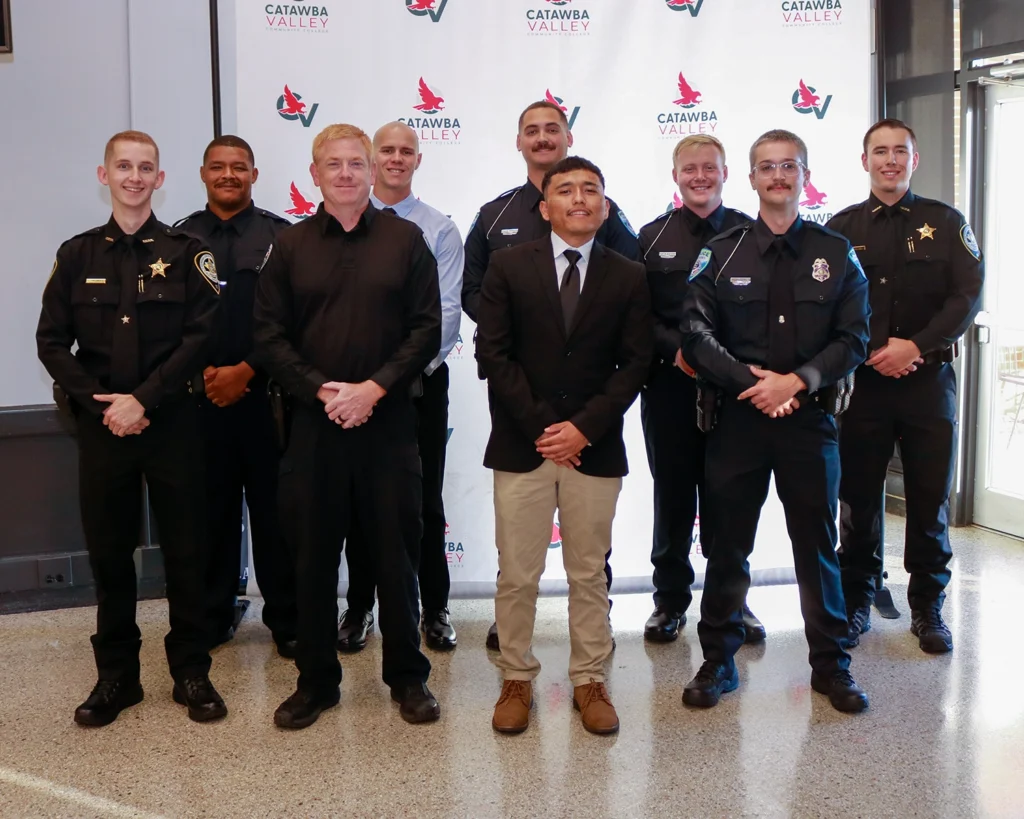
Class 85
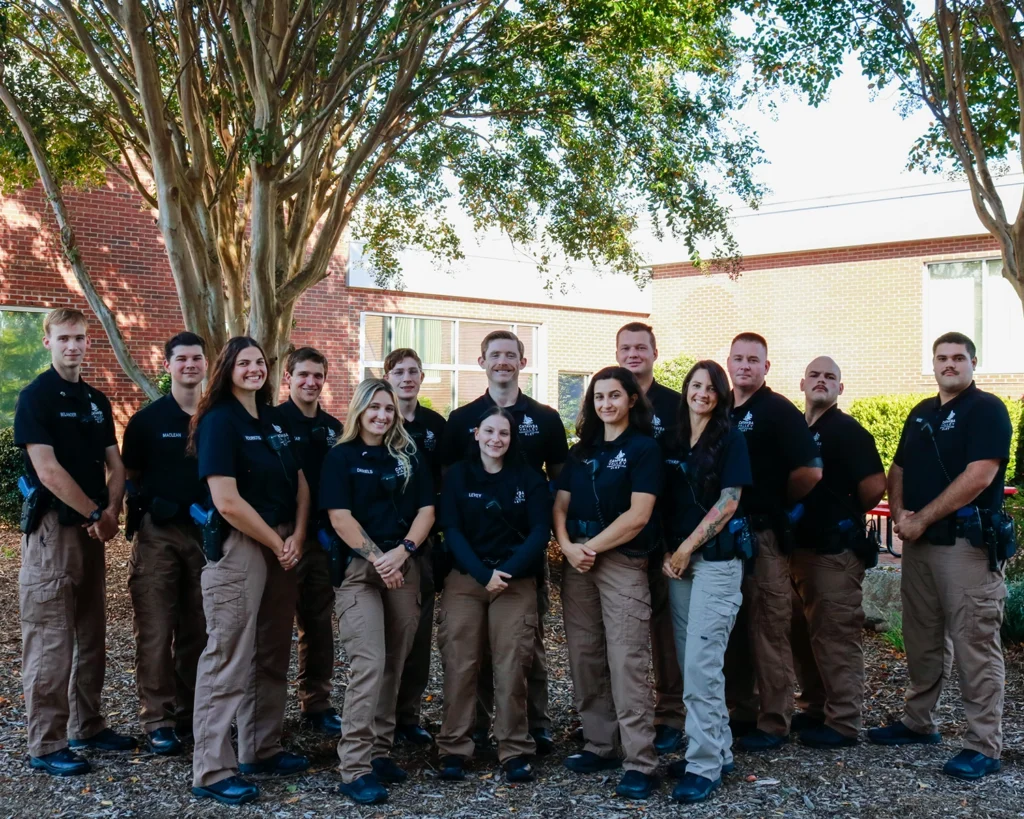
Class 86